
By Camille Agie, onStage Pittsburgh
A-listers such as Tom Cruise and Denzel Washington and the dozens of cast and crew members of the “Hamilton” tour have something in common when they work in Pittsburgh.
They require a place to call home.
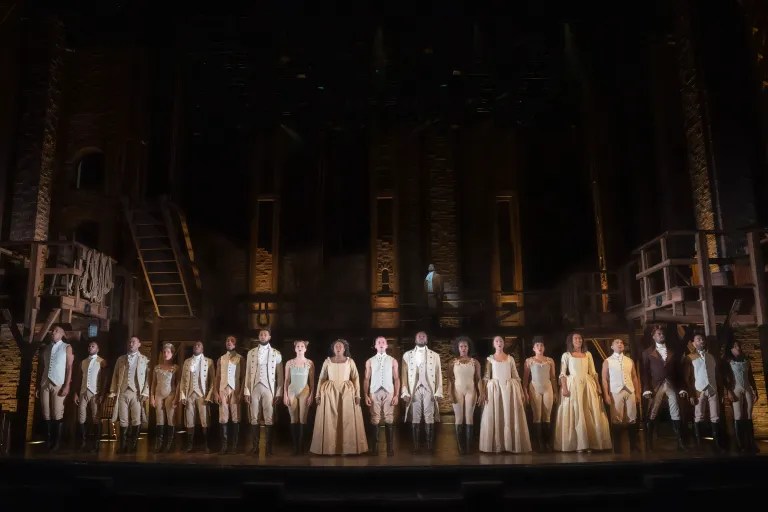
Some Hollywood types travel with family members, entourages and members of the film and stage workforce may live out of a suitcase for a year or more on the road. “Hamilton,” for example, will soon be back in Pittsburgh for a third time – with dozens of people to house, including 35 cast members – for a three-week stay at the Benedum Center.
Action-packed movies such as “The Dark Knight Rises” and coming-of-age movies like “The Perks of Being a Wallflower” to touring theatre productions like “The Wiz” or “The Lion King” may add millions of dollars to the city’s arts economy, and housing arrangements for crew, staff, and “talent” are essential to the production’s success overall.
“The Pittsburgh Film Office [PFO] plays a crucial role in supporting productions from the initial stages, aiming to attract them to film in Southwestern Pennsylvania [the 10-county region]. We serve as a comprehensive resource, assisting with crew recruitment, vendor connections, and housing arrangements,” said Dawn Keezer, executive director of the Pittsburgh Film Office.
“We collaborate closely with our hotel partners to stay informed about their offerings, availability, and recent property updates. Additionally, we maintain a database of rental listings for apartments, condos, and standalone homes to accommodate various needs.”
The array of accommodations are as diverse as the productions that visit the city. Higher-end hotels are popular options among the “talent” that come into Pittsburgh.
According to a 2014 TribLIVE article, many actors stay at the Fairmont Pittsburgh, a downtown luxury hotel. Tom Cruise stayed there with his former wife Katie Holmes and daughter Suri while the A-Lister shot scenes for the movie “Jack Reacher.”
The Fairmont Pittsburgh offers a spa and health club, restaurants, and many more amenities that may be appealing to stars.
“For actors or talent on short-term assignments, typically for feature films, full-service hotels with amenities like dry cleaning, 24-hour room service, and facilities such as pools or gyms are usually preferred,” Keezer noted. “For longer-term projects, such as TV series that may film for 6-to-9 months, requests often include apartments, condos, or houses. These options provide more space and access to kitchen facilities, which are beneficial for extended stays.”
Taking care of performers’ housing needs is essential to maintaining their comfort and productivity.
Billy Mason, the associate producer at Pittsburgh CLO, said building relationships with local companies plays an important role in managing the housing for out-of-town cast members in every show.
“For us, we have very strong partnerships with three local downtown hotels, one corporate housing company, one short-term leasing company, and one Airbnb ‘super host,’” Mason said.
“We utilize all these tools to accommodate the number of actors, creatives, and designers we bring into the Pittsburgh market for production. One of our relationships is with The Omni William Penn. They have been paramount in providing housing and great service to our company of actors and creatives.”
The Omni William Penn Hotel, a historic, 23-floor downtown hotel, has hosted a range of notable figures, including former President John F. Kennedy.
In contrast, the Cork Factory Lofts in the Strip District, formerly a cork factory converted into apartments in 2007, offers a different kind of charm. While it may not be as luxurious as the Fairmont Pittsburgh or the Omni William Penn, it is quite popular among actors and crew that are staying in the city for an extended period.
According to a 2010 Pittsburgh-Post Gazette article, the cast and crew of “The Road” rented dozens of apartments in the Cork Factory in the Strip District in 2008, including one for star Viggo Mortenson and another for director John Hillcoat.
The film and theater industries have had an influence on the range and quality of housing options Pittsburgh offers, Keezer said.
“The local housing market has seen an increase in furnished, corporate housing options suitable for short-term rentals [minimum three months] due to the presence of the film and theater industry,” Keezer said. “The demand for such housing is also influenced by the city’s sports teams, contributing to the availability of furnished rental properties.
“Additionally, the trend of converting office buildings in downtown Pittsburgh into residential spaces may lead to more high-end, furnished housing options in the future.”
According to the 2022 Pittsburgh Downtown Partnership 2022 Residential Report, “Residential growth is a major development focus in Greater Downtown, with completed and planned units continuing to increase. There are currently 9,043 existing residential units Downtown, with the largest percentage in the Golden Triangle neighborhood, followed by the Strip District,” the report noted. “There are 6,030 units in the pipeline, including 1,350 units under construction and another 4,680 planned or conceptualized.”
Readily available housing can be part of the attraction for performance companies that come to town for days or weeks, such as the musicals of the PNC Broadway in Pittsburgh series and national and international shows presented by the Pittsburgh Dance Council.
Jason Pelusio, who serves as the company manager for the Angelica Cast, one of the national touring companies of Hamilton, works with travel agents to help find housing for the cast and crew coming to Pittsburgh September 11-29.
It takes 13 53-foot trailers to move the production from one city to another, highlighting the scope and intricacy of these tours.
“People are staying in various locations in and around Pittsburgh,” noted Pelusio, whose job includes administrative and human resource needs, such as traveling, contracts, and benefits, as well as housing. “For longer engagements, we may seek out housing options with kitchens/kitchenettes.”
Working for a Pittsburgh-based company that brings in Broadway-caliber talent, it is Mason’s job to make housing arrangements for visiting artists who mesh with local cast and crew members.
“Our theater operates as a fully unionized theater,” Mason explained. “Due to this, there are certain requirements I have to look for. One of them is proximity to the theater and rehearsal space. I also must find a place that has at minimum a mini-refrigerator and microwave. There are slight variations in these requirements based on the type of union contract a show is operating under. For some touring productions, the requirements are different and may require a shorter walking distance to the theater and something additional, like a full kitchen.”
Mason added that, “… based on availability, I do try to get my actors and creative teams a situation as comfortable as possible within the requirements and in consideration of their time with us.This often means a full apartment with a kitchen. Our actors and creatives always have their own private space, regardless of the type of [apartment or hotel accommodation].”
Similarly, Mark Clayton Southers, founder and producing artistic director of Pittsburgh Playwrights Theatre Company, and his wife, Neicy Readie-Southers, own a house used for visiting artists that is located one block from the company’s Hill District venue, Madison Arts Center. They also house artists in an apartment in the basement of their nearby family home on the Hill. The August 2024 production of August Wilson’s “Radio Golf,” which will have performances at both the August Wilson House in the Lower Hill District and Madison in the Upper Hill, includes three out-of-towners — director Montae Russell, actor Roosevelt Watts Jr. and the play’s lighting designer.
“Our artists’ housing is a two-bedroom house complete with a gym, and then we have photos of our artists and artwork representing film, dance, theatre, visual art – everything,” Southers said. “It’s really nice. Different [local] theater companies, like DEMASKUS [Theatre Collective], have utilized it. [Actor] David Whalen stays there a lot when he’s in town. … And then we have our basement apartment … We don’t usually have more than three or four people from out of town, so it’s been working out pretty well.”
So how do people such as Mason see the demand for artist housing evolving in the coming years?
“The housing demand will continue to increase as more and more opportunities for working actors and creatives are offered,” Mason said. “Pittsburgh’s hotel market is already in a vacancy shortage within the downtown market, but newer hotel offerings have helped to relieve some of that shortage. Corporate housing and short-term spaces have just begun to increase in the last few months.”
“I am hoping,” he concluded, “this will open the door to better negotiations and situations for our traveling artists and help us to be able to continue to open our doors to these amazing artists.”
Camille Agie is a student at Duquesnse University and one of 10 Pittsburgh Media Partnership summer interns. Camille interned with onStage Pittsburgh.
 Pittsburgh Media Partnership